Why do I choose to become a NDIS service provider

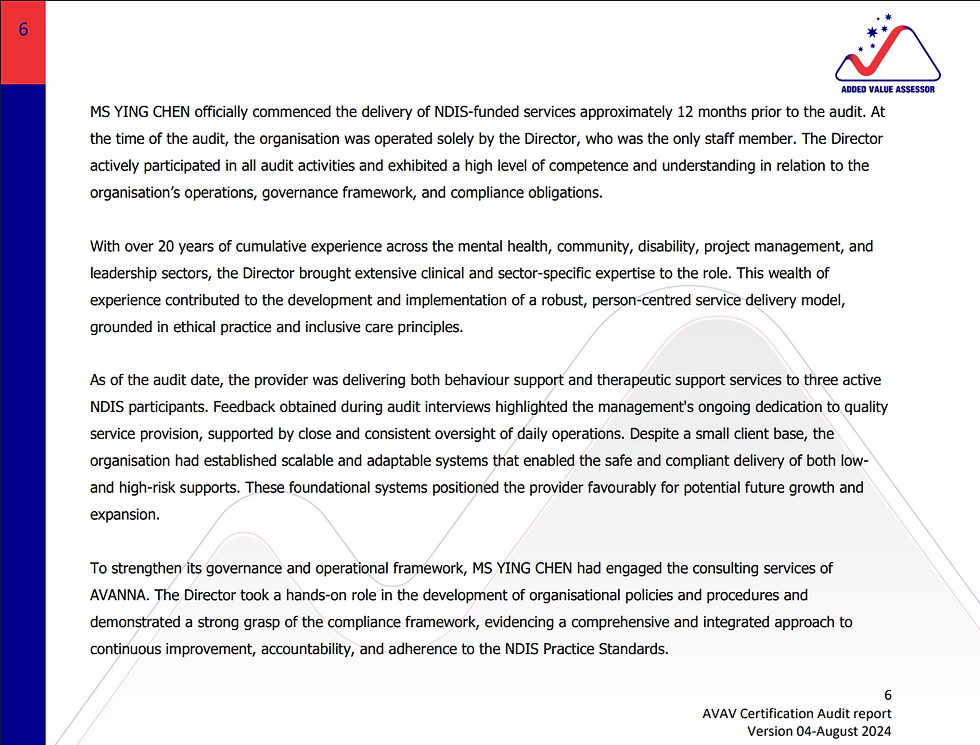
I was told that it is rare for a sole practitioner to go down the path of becoming an NDIS provider because of the stress of compliance and the financial investment required for auditing. However, this was the decision I made—not for myself, but for all current and future participants—to provide reassurance that you are in good hands. I keep myself updated and compliant with the most recent legislation.
I am committed to, and strive to deliver, the most inclusive, person-centred, holistic, and high-quality support to all my clients. And, oh yay...my first auditing is 100% conformity!
I have submitted three modules for the application:
Therapeutic Support for children 9 years and under (Early Intervention)
Therapeutic Support for individuals 9 years and above
Specialist Behaviour Support
Some of the evidence highlighted in my auditing report included, but was not limited to:
- The Director (myself) ...exhibited a high level of competence and understanding in relation to the organisation's operations, governance framework, and compliance obligations;
- The wealth of experiences contributed to the development and implementation of a robust, person-centred service delivery model grounded in ethical practice and inclusive care principles;
- ...demonstrated a sustained commitment to delivering equitable, innovative, and person-focused services.
- The organisation's core values were clearly reflected in its approach to service delivery, promoting dignity, inclusion, responsiveness, and resilience in meeting the varied needs of individuals accessing NDIS support;Kelly has extensive experience delivering Positive Behaviour Support and therapeutic services to children and young people with a range of disabilities including autism spectrum disorder, ADHD, intellectual disability, and complex mental health and trauma backgrounds.
- Her work focuses on supporting the development of functional skills, improving emotional regulation, and promoting meaningful participation in everyday life through person-centred and trauma informed approaches.
- She is experienced in conducting functional behaviour assessments developing behaviour support plans that comply with NDIS restrictive practices reporting requirements, and supporting implementation in collaboration with families, schools, allied health professionals, and disability service providers.
- Kelly works closely with families and support networks to build capacity through coaching, education, and collaborative planning. Her approach is inclusive and culturally responsive, particularly for families from diverse linguistic and cultural backgrounds.
- The applicant has a strong foundation of evidence-informed, values-driven practice and is committed to delivering high-quality, ethical, and compliant services under the NDIs framework.
Now, it is a waiting game because the final approval timeline is unpredictable. Welcome to the NDIS—where, to be fair, participants, service providers, auditors, and anyone else in the same boat all face the reality that timelines aren’t always clear. That's a topic for a different post :)


Comments